The Atlas of Algorithms
Watch the idea work — every algorithm through four lenses: motion, invariant, cost, and life in the wild.
No algorithms match — try a family or technique name.
Classic Foundations 26
The textbook foundations — sorting, search, graphs, trees & structures, strings, geometry, numbers, dynamic programming, compression, and the classic randomized methods — most built around an invariant that proves them correct.
Sorting 5
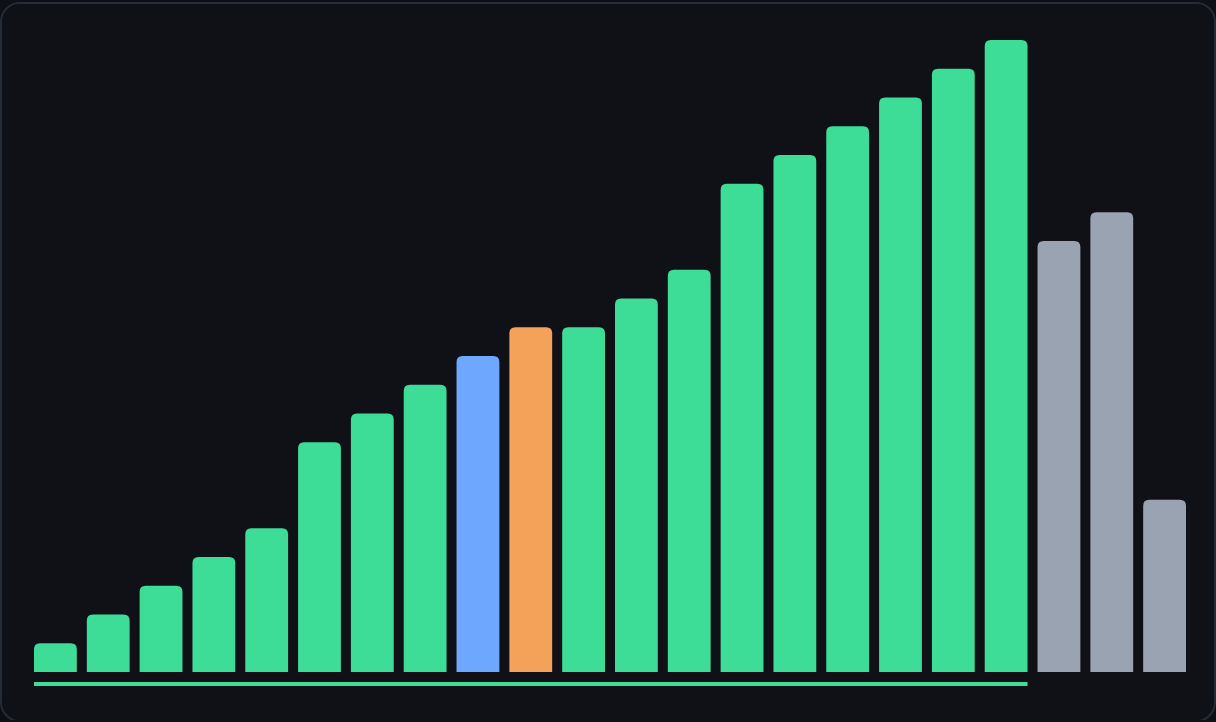
Insertion Sort
Build a sorted prefix one element at a time, sliding each new value back into its place — the way most people sort a hand of cards.
O(n²)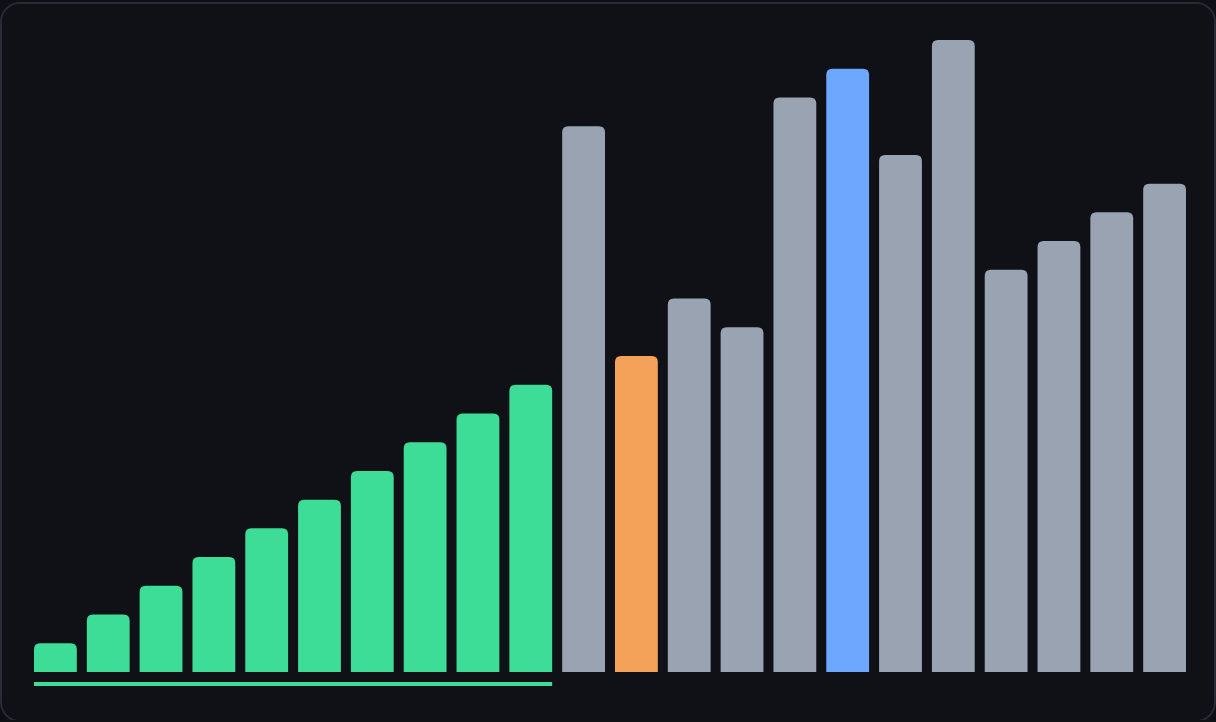
Selection Sort
Repeatedly find the smallest remaining value and move it to the front — the fewest swaps any sort can make.
Θ(n²)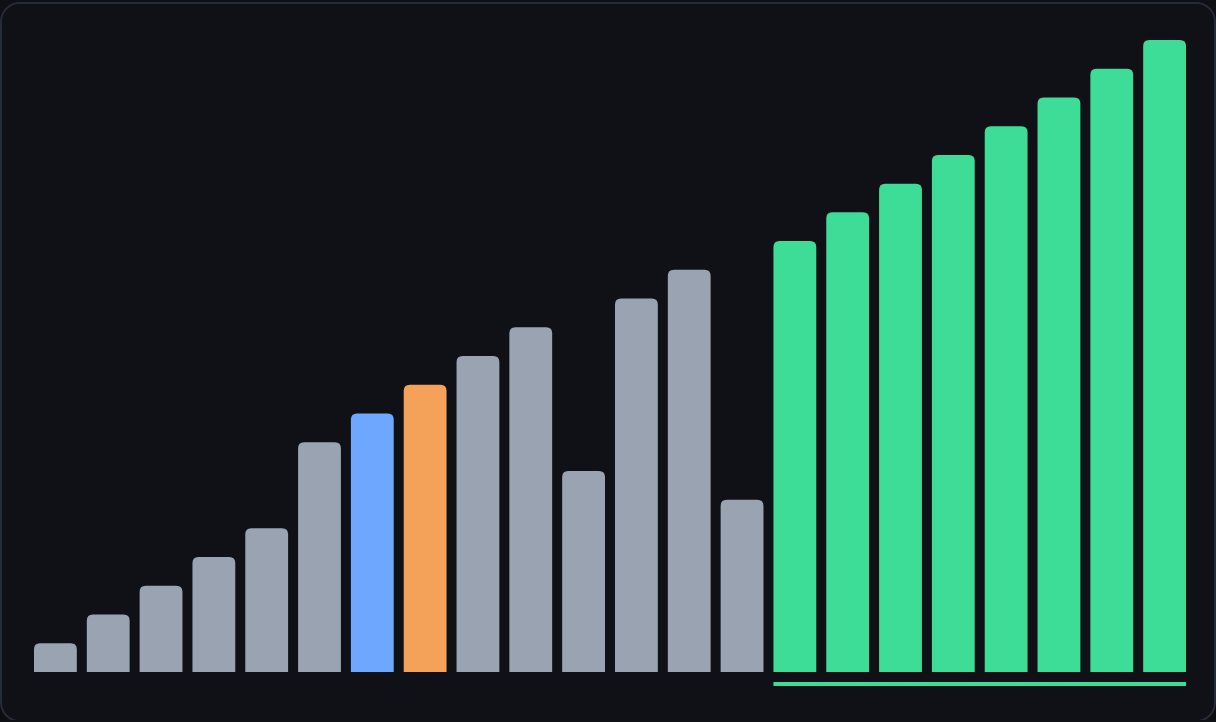
Bubble Sort
Sweep through the list swapping out-of-order neighbors; the largest value "bubbles" to the end each pass.
O(n²)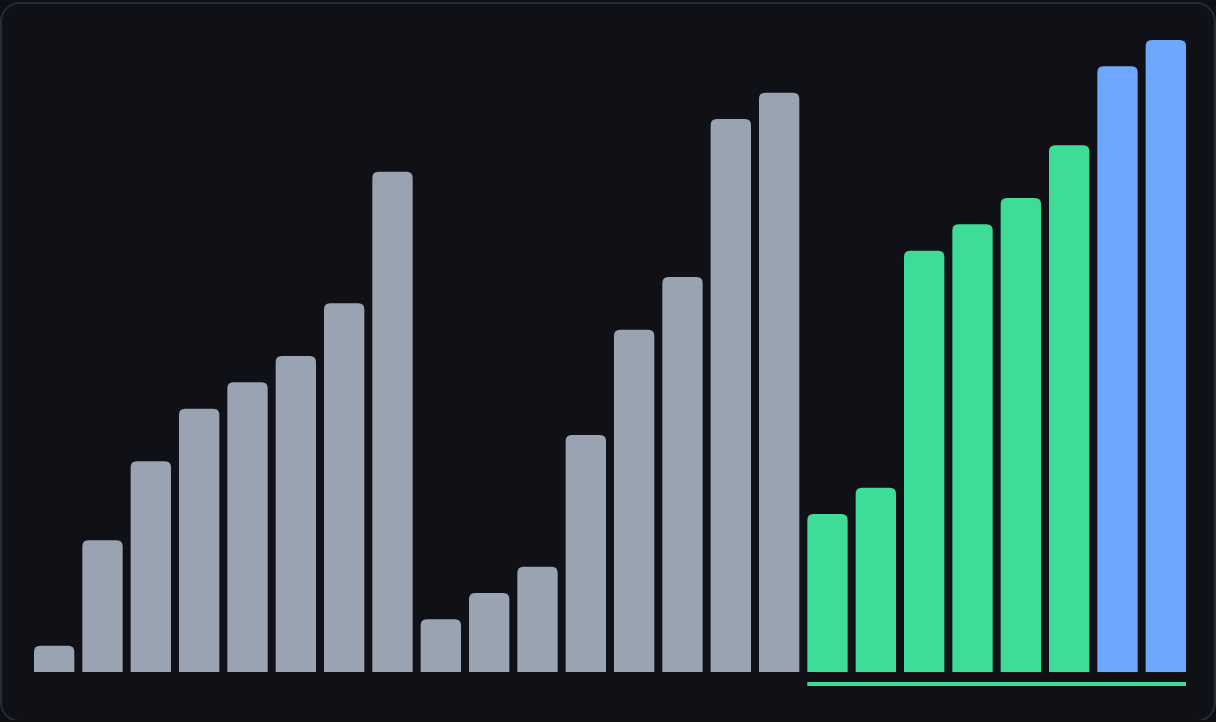
Merge Sort
Split into runs, then merge sorted runs into longer sorted runs — guaranteed n log n, and stable.
Θ(n log n)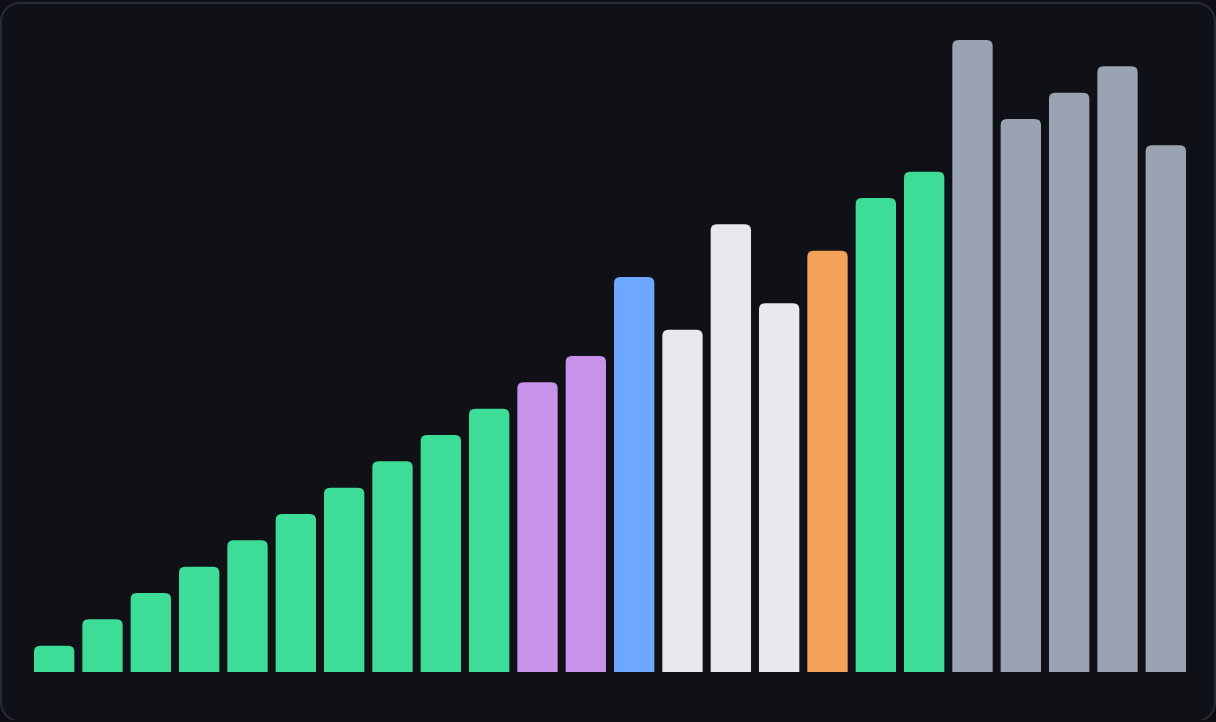
Quicksort
Pick a pivot, shove everything smaller to its left and larger to its right, then recurse — fast on average, in place.
Θ(n log n) avgSearching & Selection 2
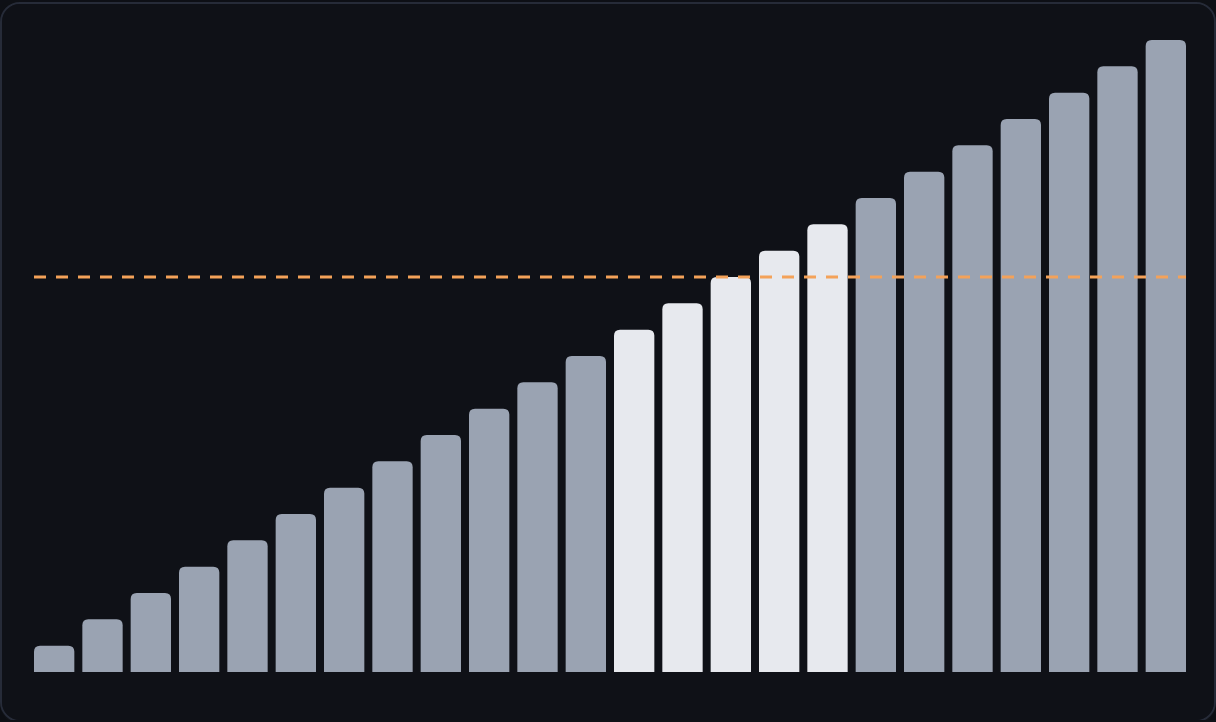
Binary Search
Halve a sorted array each step: compare the middle, then throw away the half that cannot contain the target.
Θ(log n)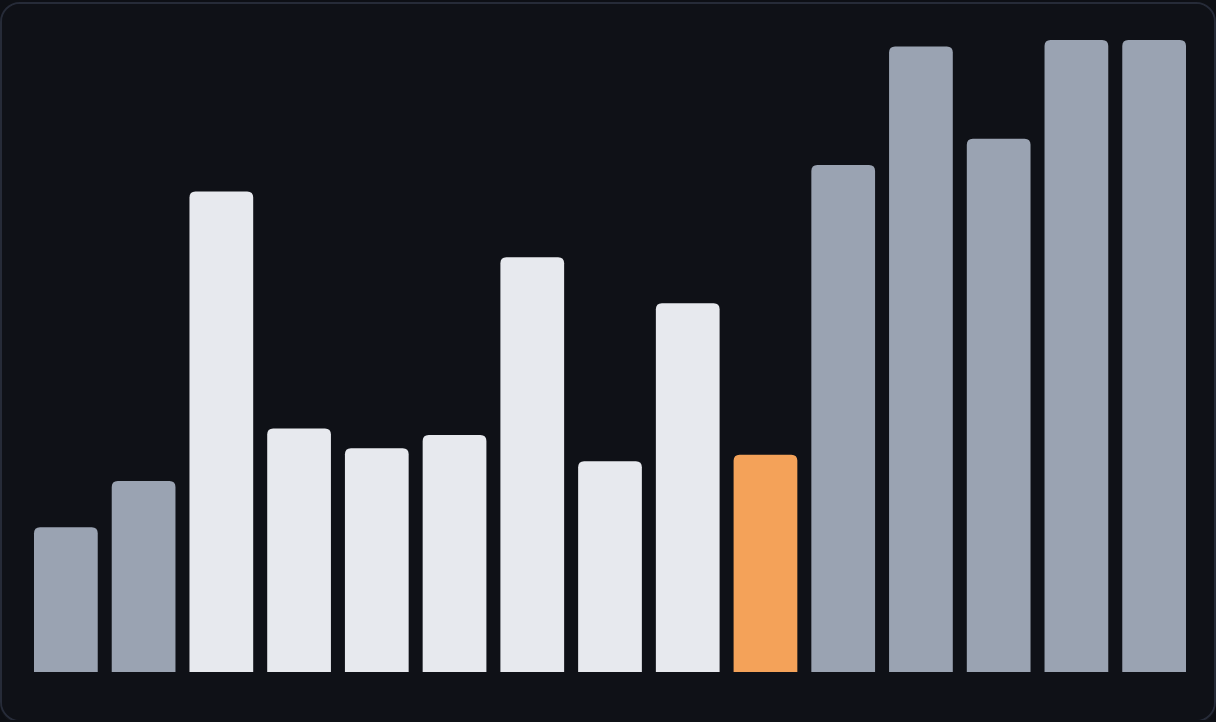
Quickselect
Find the k-th smallest value without fully sorting — partition, then chase rank k into one side only.
O(n) average, O(n²) worstGraphs 4
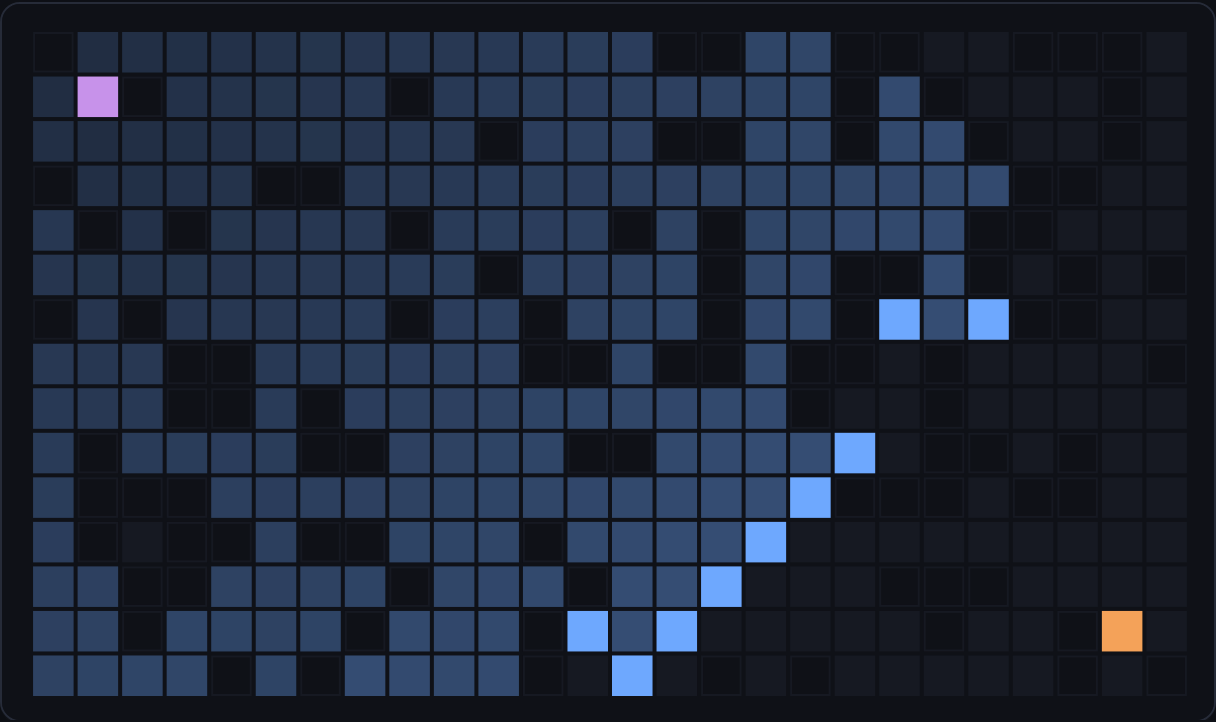
Breadth-First Search
Flood a grid in expanding waves; the first time the wave touches a cell, it has arrived by a shortest path.
O(V + E)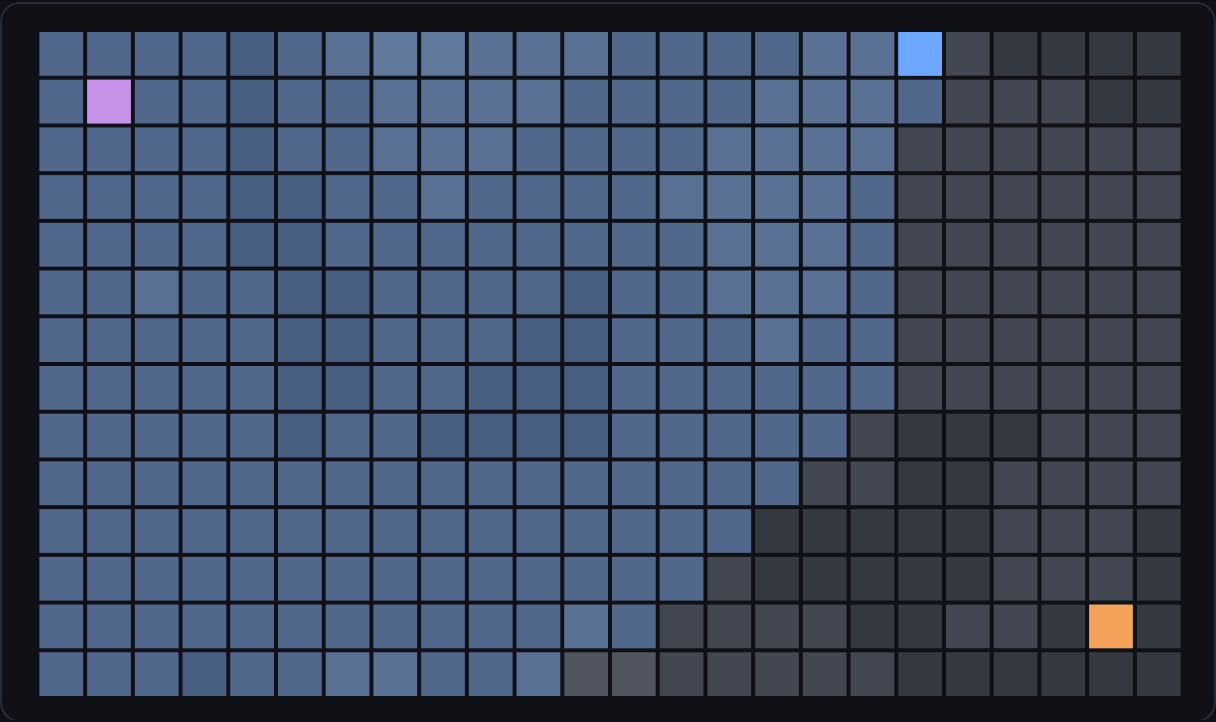
Dijkstra’s Algorithm
Find the cheapest route through weighted terrain by always settling the nearest unfinished node next.
O((V+E) log V)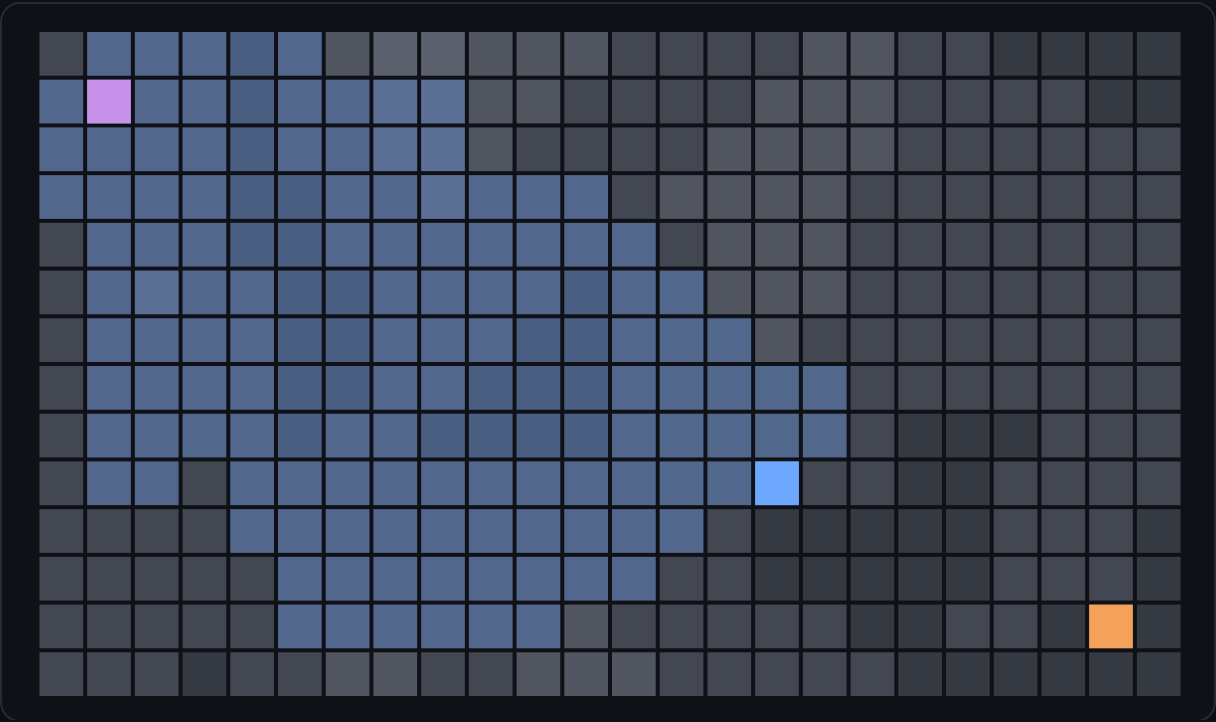
A* Search
Dijkstra with a sense of direction: a heuristic pulls the search toward the goal, so it settles a fraction of the cells.
O((V+E) log V)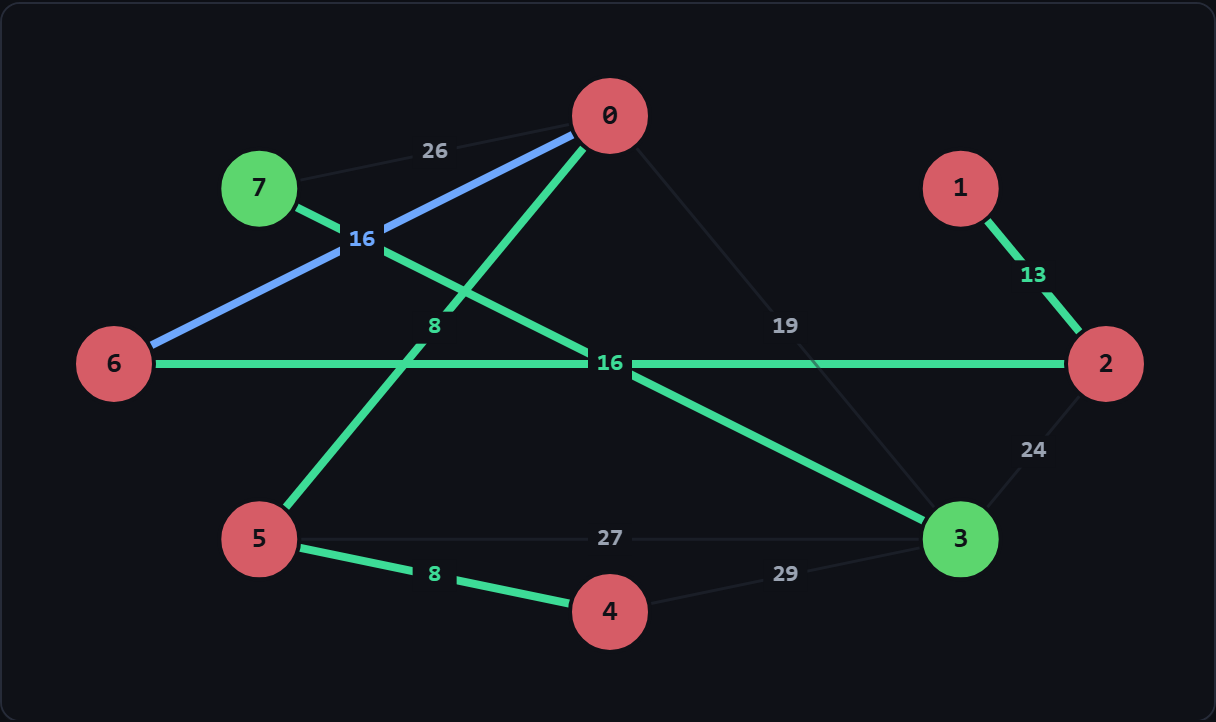
Kruskal's MST
Connect everything for the least total weight — add the cheapest edge that never makes a cycle.
O(E log E)Trees & Structures 2
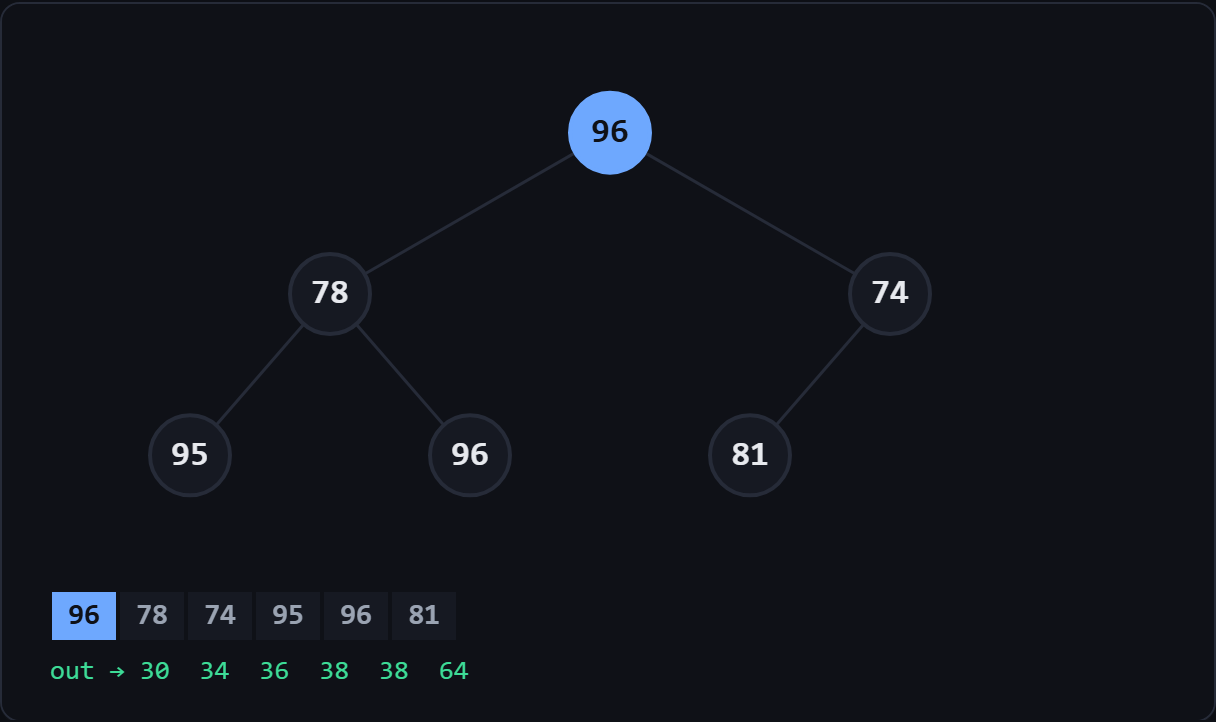
Binary Heap
A tree packed into an array that always serves the smallest item next — the engine inside a priority queue.
O(log n) per op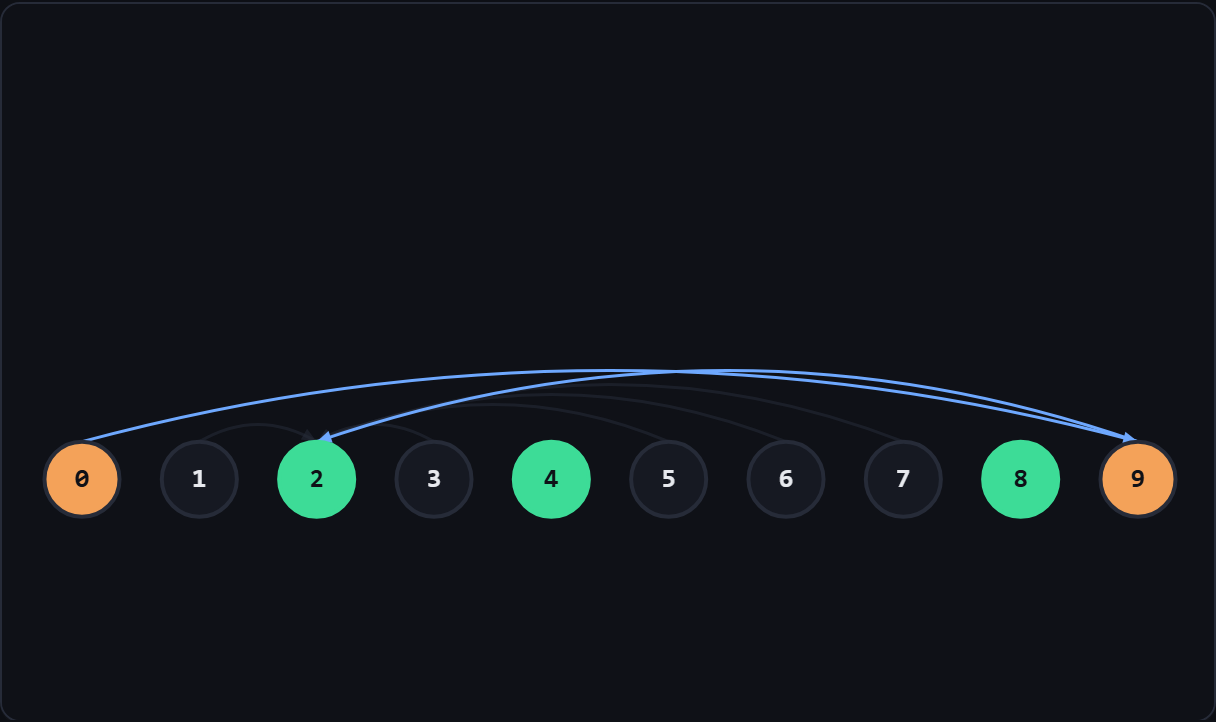
Union–Find
Track a growing collection of disjoint sets and merge them in nearly constant time — the backbone of connectivity.
O(α(n)) amortizedStrings 2
Knuth–Morris–Pratt
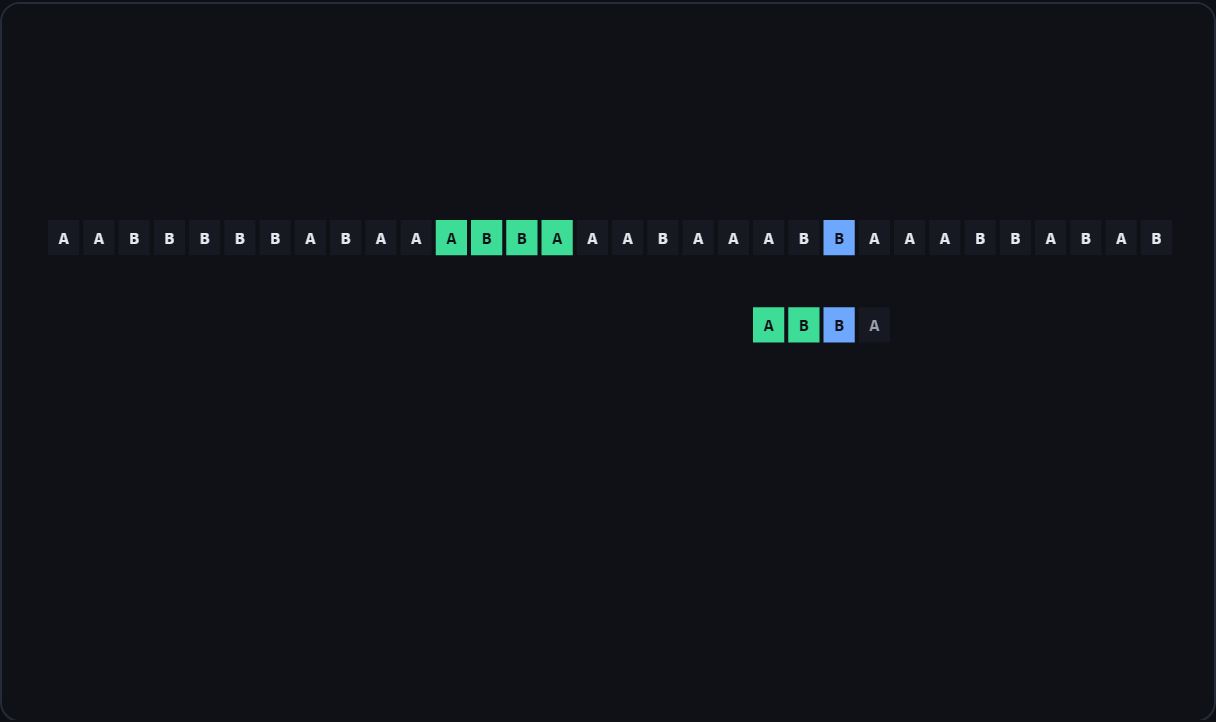
Find a pattern in text in linear time by never re-reading a character — a precomputed failure table says how far to jump.
O(n + m)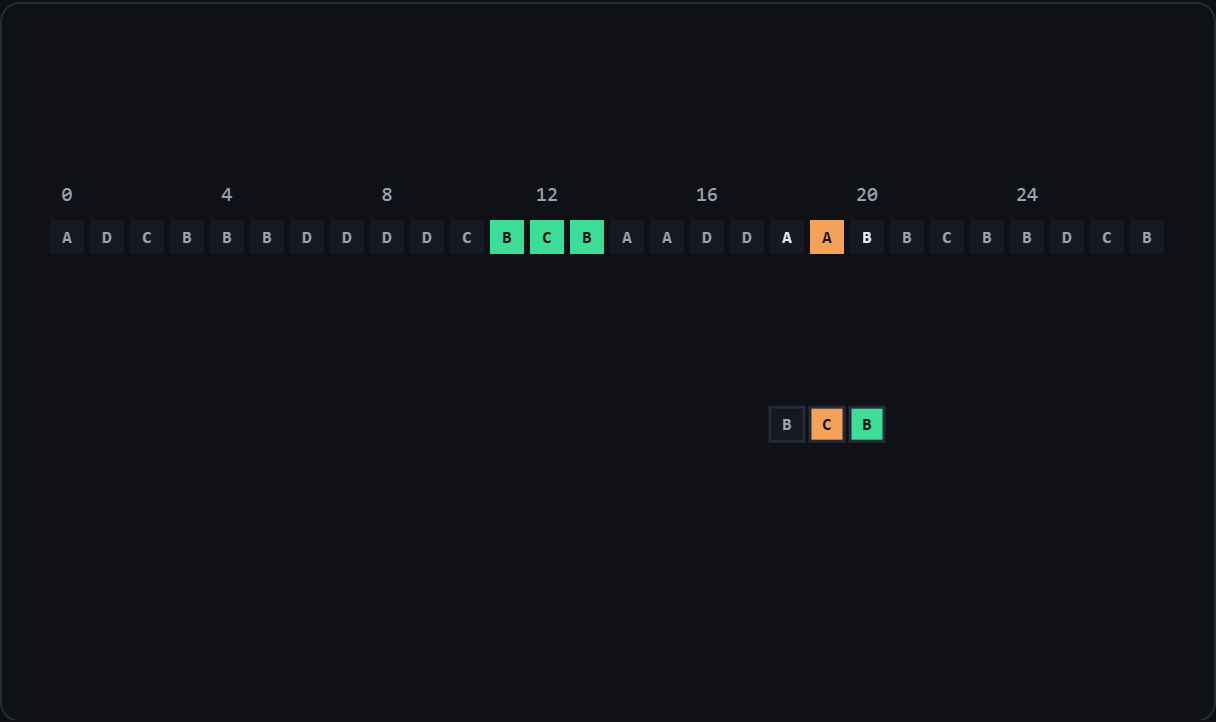
Boyer–Moore
Search by comparing the pattern back-to-front and skipping ahead — often examining only a fraction of the text.
O(n/m) best, O(nm) worstComputational Geometry 2
Convex Hull
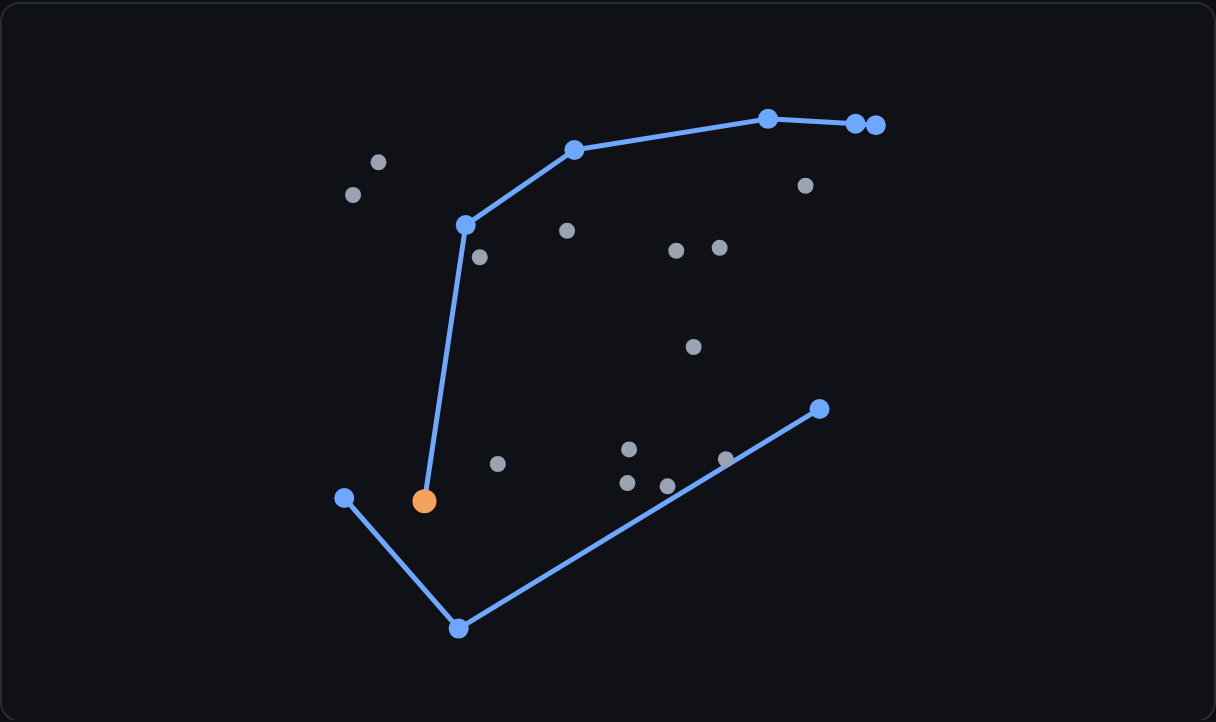
Snap a rubber band around a cloud of points — the smallest convex polygon that contains them all.
O(n log n)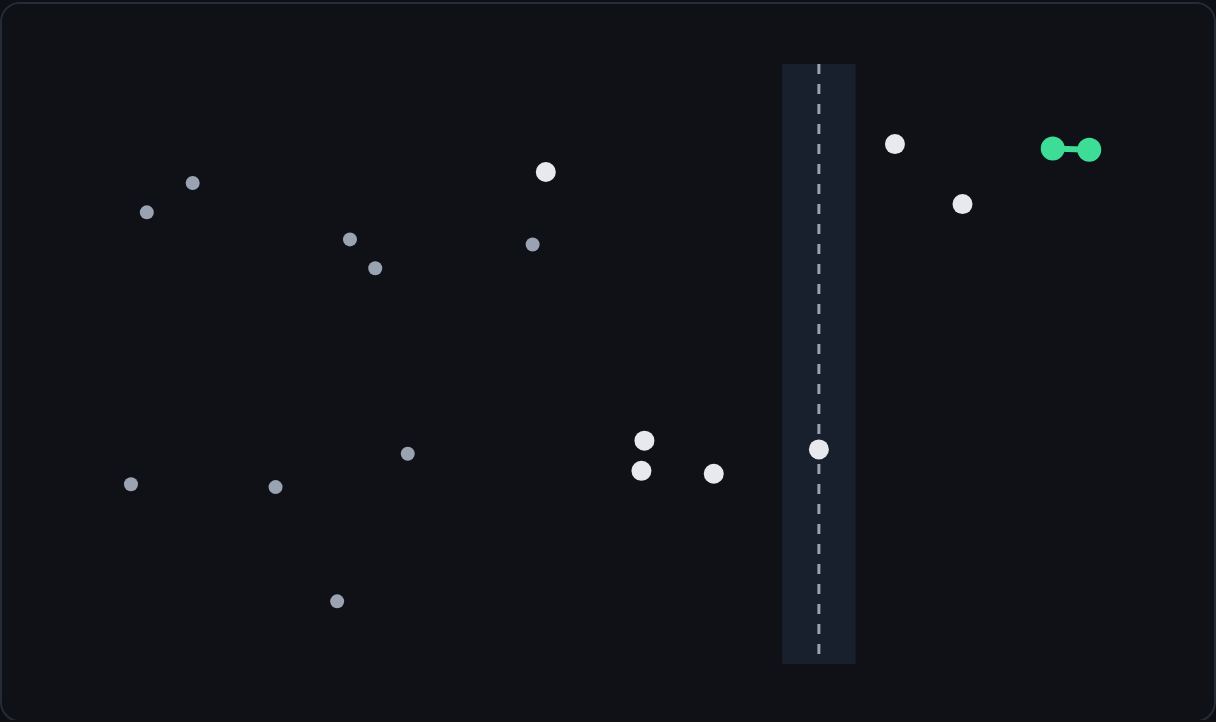
Closest Pair of Points
Find the two nearest points among many in O(n log n) — divide the plane, then mind only a thin strip.
O(n log n)Numerical & Number-Theoretic 3
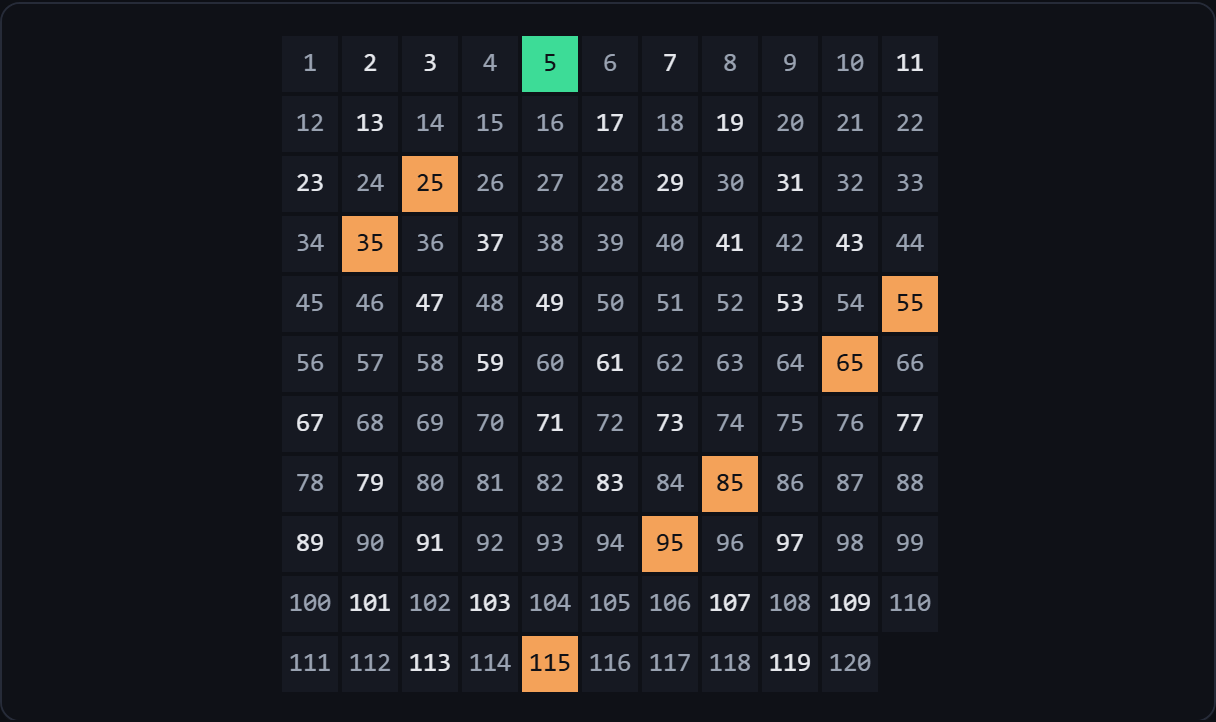
Sieve of Eratosthenes
Find every prime up to n by crossing out the multiples of each prime in turn — what survives is prime.
O(n log log n)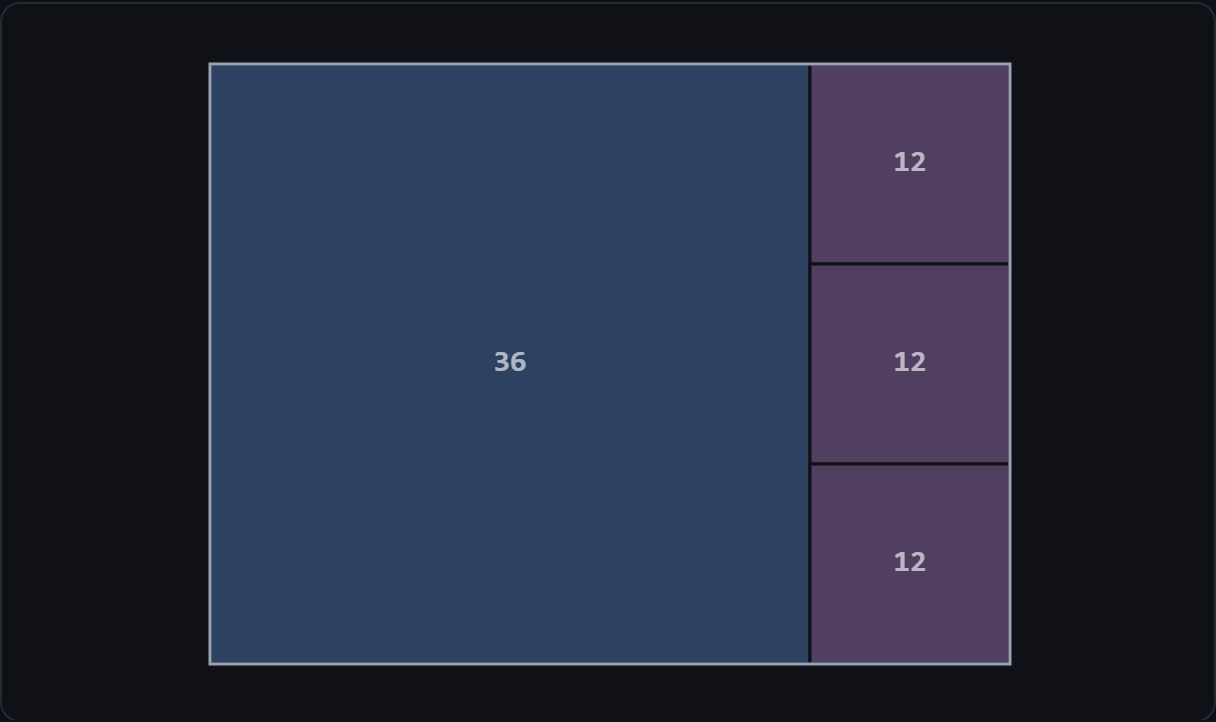
Euclidean Algorithm
Find the greatest common divisor by repeatedly replacing the larger number with its remainder — the oldest algorithm.
O(log min(a,b))
Fast Fourier Transform
Turn a signal into its frequencies in O(n log n) — the divide-and-conquer that reshaped signal processing.
O(n log n)Dynamic Programming & Optimization 2
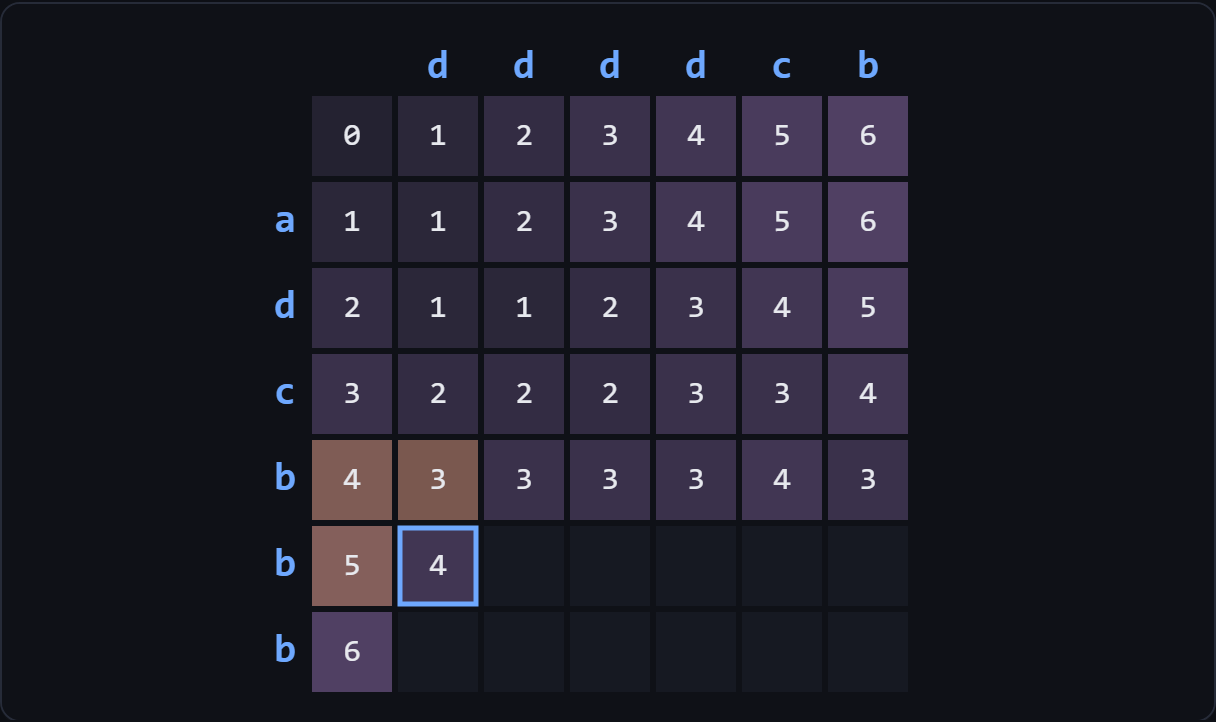
Edit Distance
The fewest insert/delete/substitute edits to turn one string into another — built up from a grid of subproblems.
O(m·n)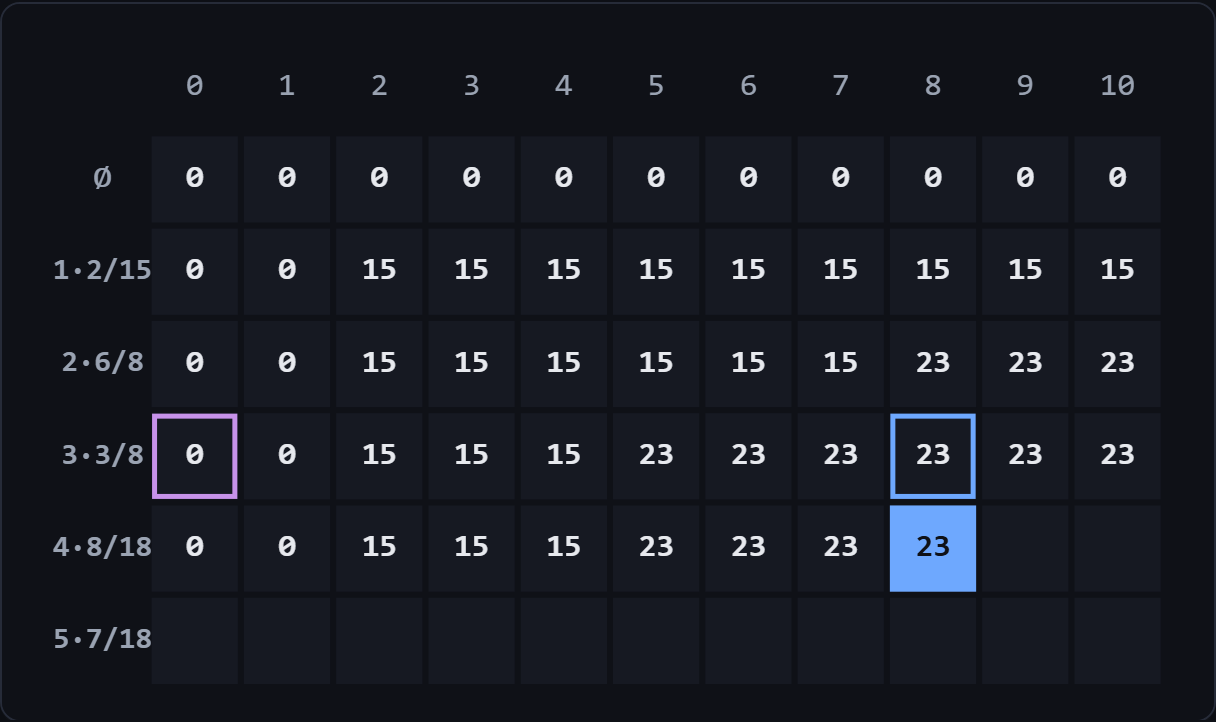
0/1 Knapsack
Pack the most valuable subset that fits — by solving every smaller capacity for every prefix of items.
O(n·W)Randomized & Probabilistic 2
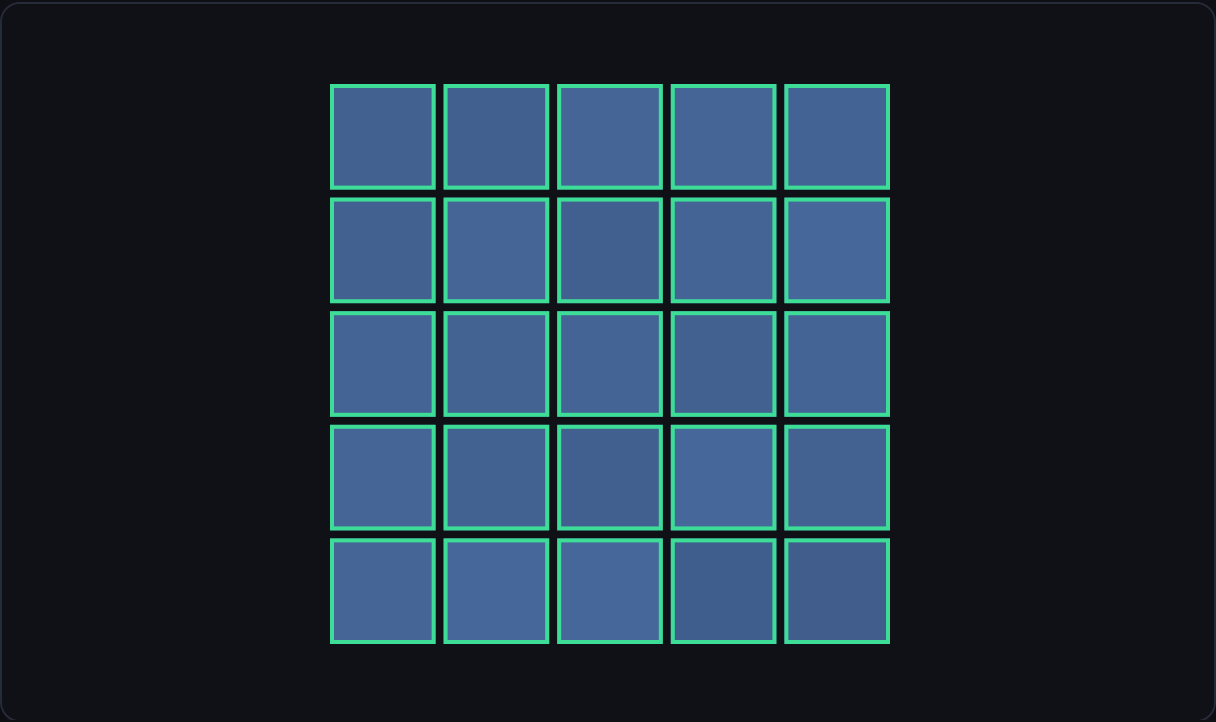
Fisher–Yates Shuffle
Shuffle a deck so every ordering is equally likely — one pass, one swap per card, no bias.
O(n)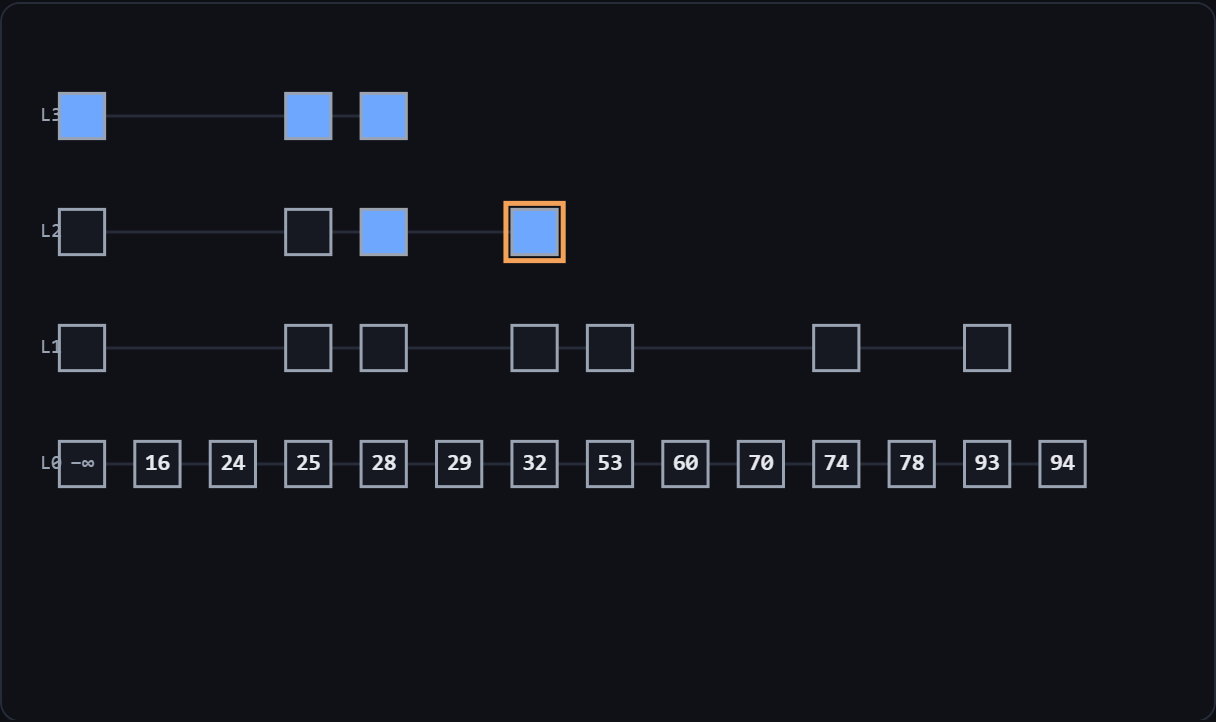
Skip List
Balanced search without the balancing — random express lanes give expected O(log n) with a coin flip.
O(log n) expectedCompression & Coding 2
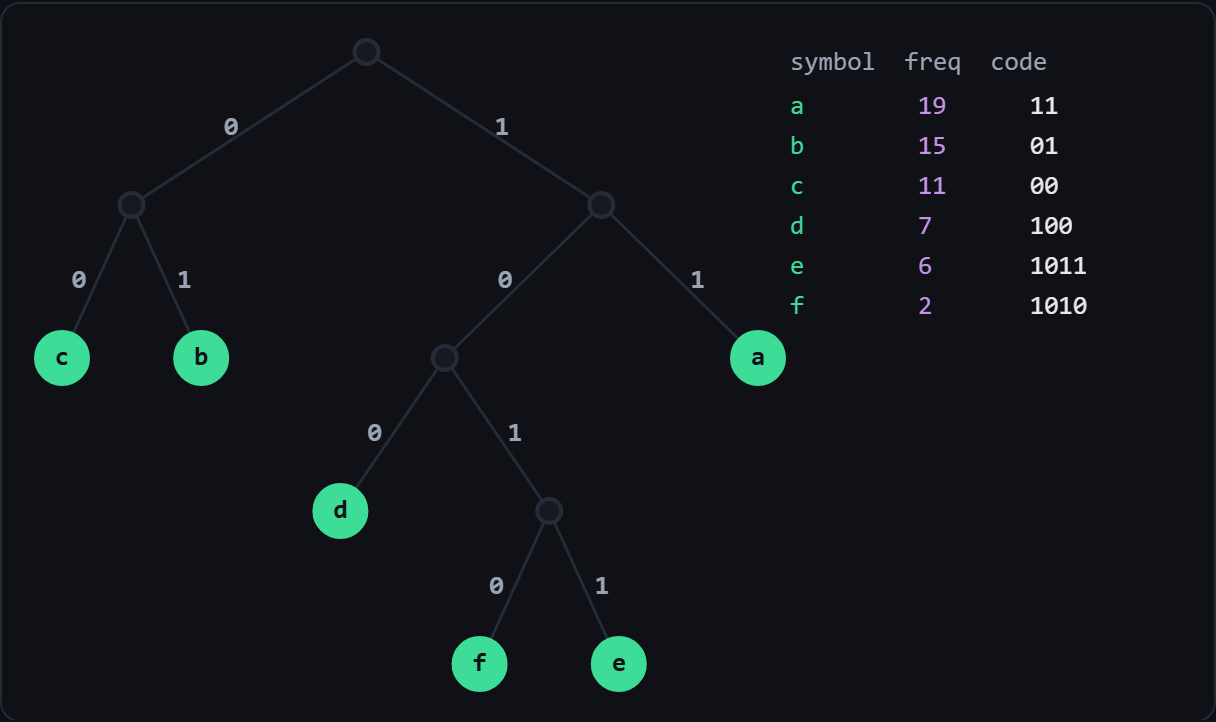
Huffman Coding
Give frequent symbols short codes and rare ones long codes — the optimal prefix-free code, built by merging the two rarest.
O(n log n)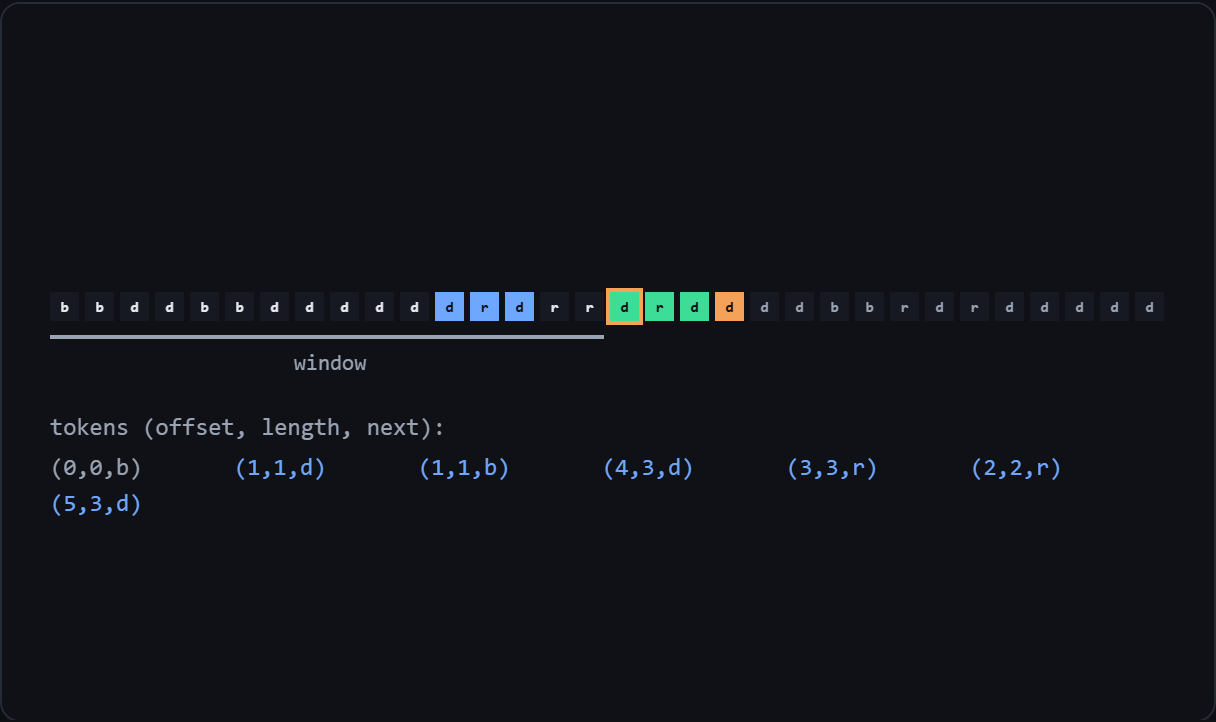
LZ77
Compress by pointing back at what you have already seen — the sliding-window idea behind gzip and PNG.
O(n · window)The Modern & Advanced Wing 14
Randomized and approximate algorithms that run at scale — sketching & streaming, similarity search, spectral methods, hashing, optimization & flows. Their soul is a probabilistic guarantee, shown empirically.
Sketching & Streaming 4
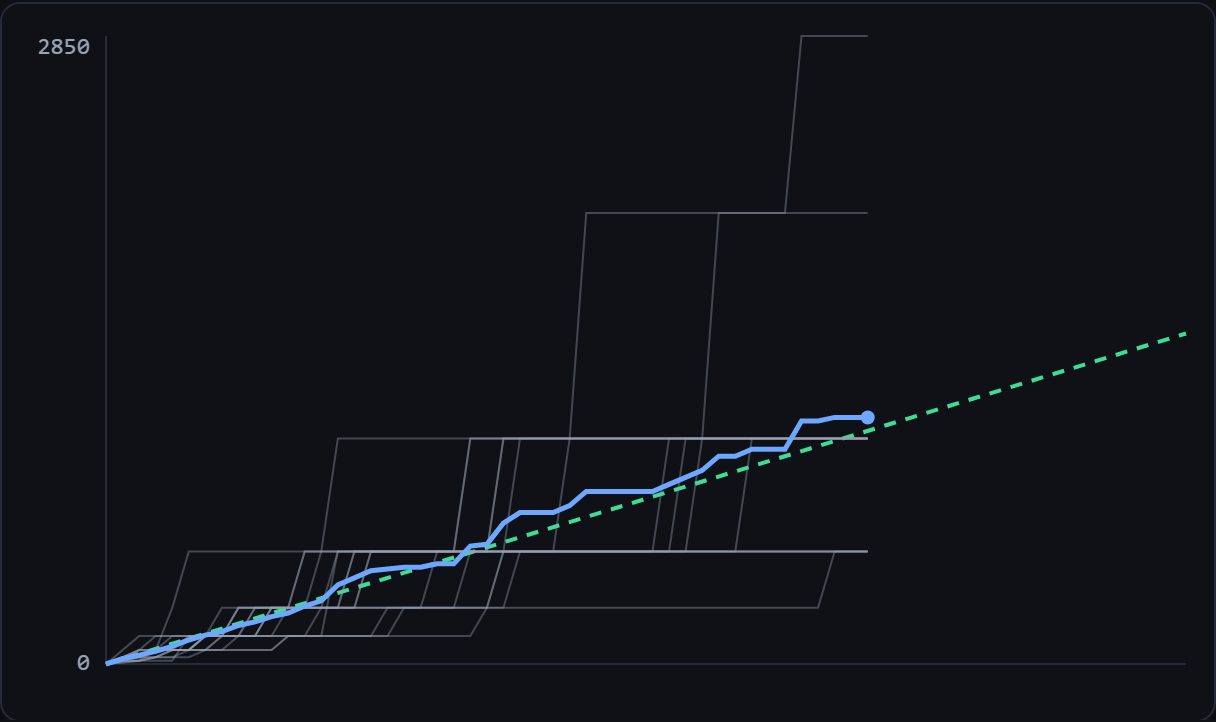
Morris Counter
Count to a billion in a byte — approximately. Store log log n bits and accept a random, but unbiased, estimate.
O(1)/update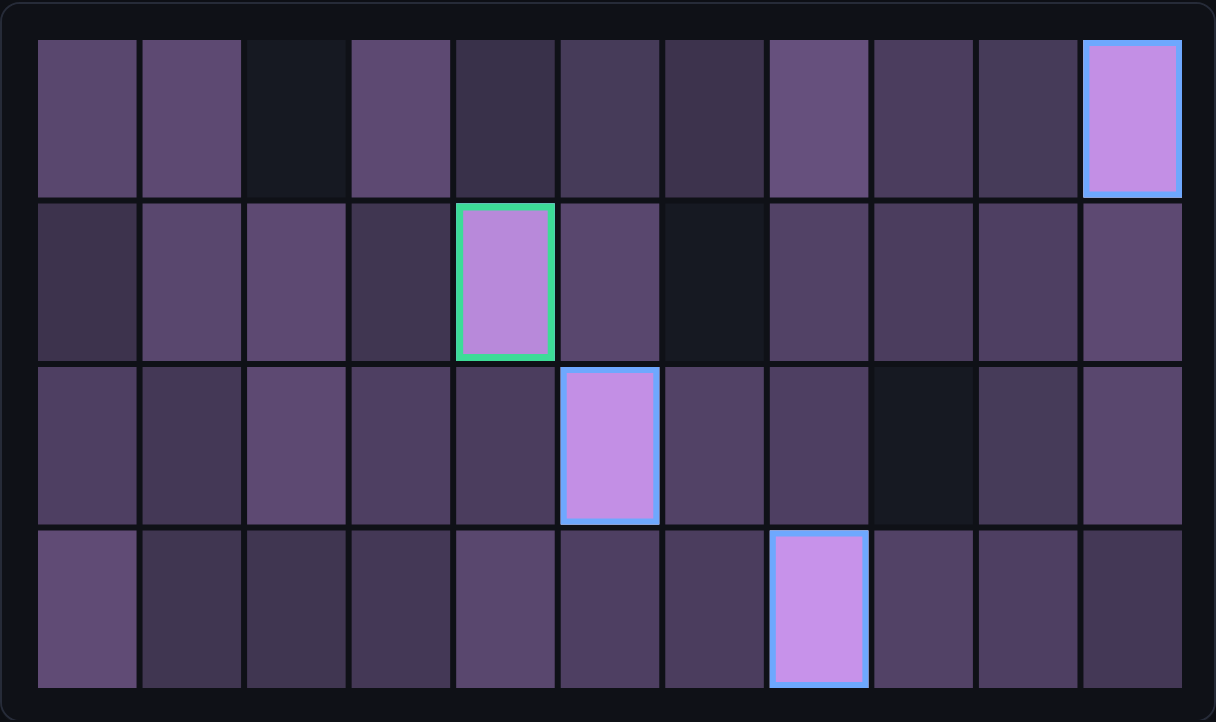
Count–Min Sketch
Count every item in a stream using one small grid — never undercounting, and overcounting only a little.
O(d)/update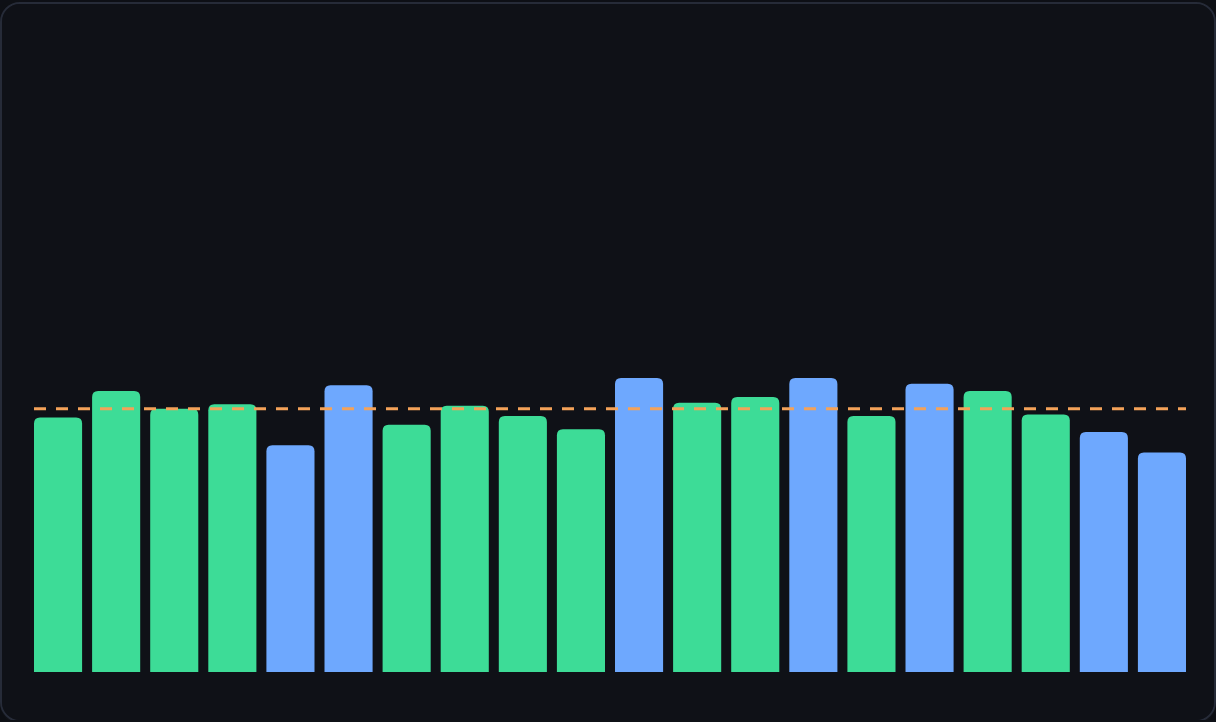
Reservoir Sampling
Pick k items uniformly at random from a stream of unknown length, in one pass and O(k) memory.
O(1)/item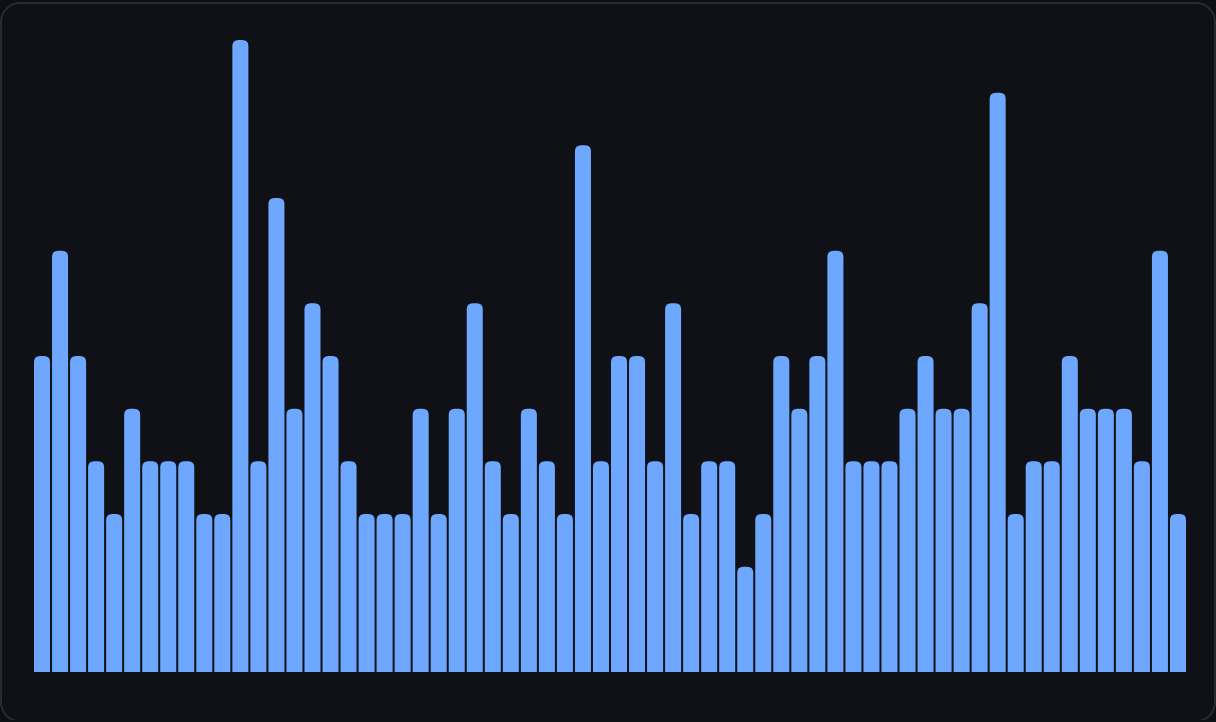
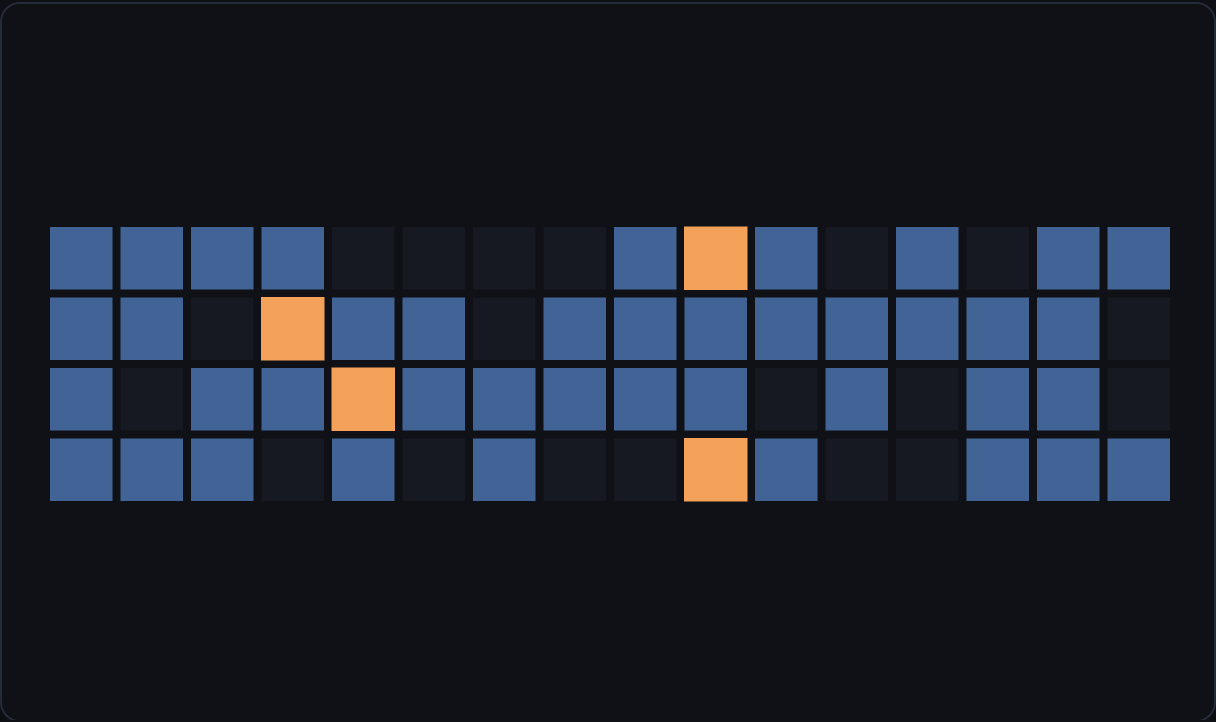
HyperLogLog
Count distinct items in a massive stream using a few kilobytes — by watching the rarest hash patterns.
O(1) per itemHashing Schemes 2
Similarity & High-Dimensional Search 3
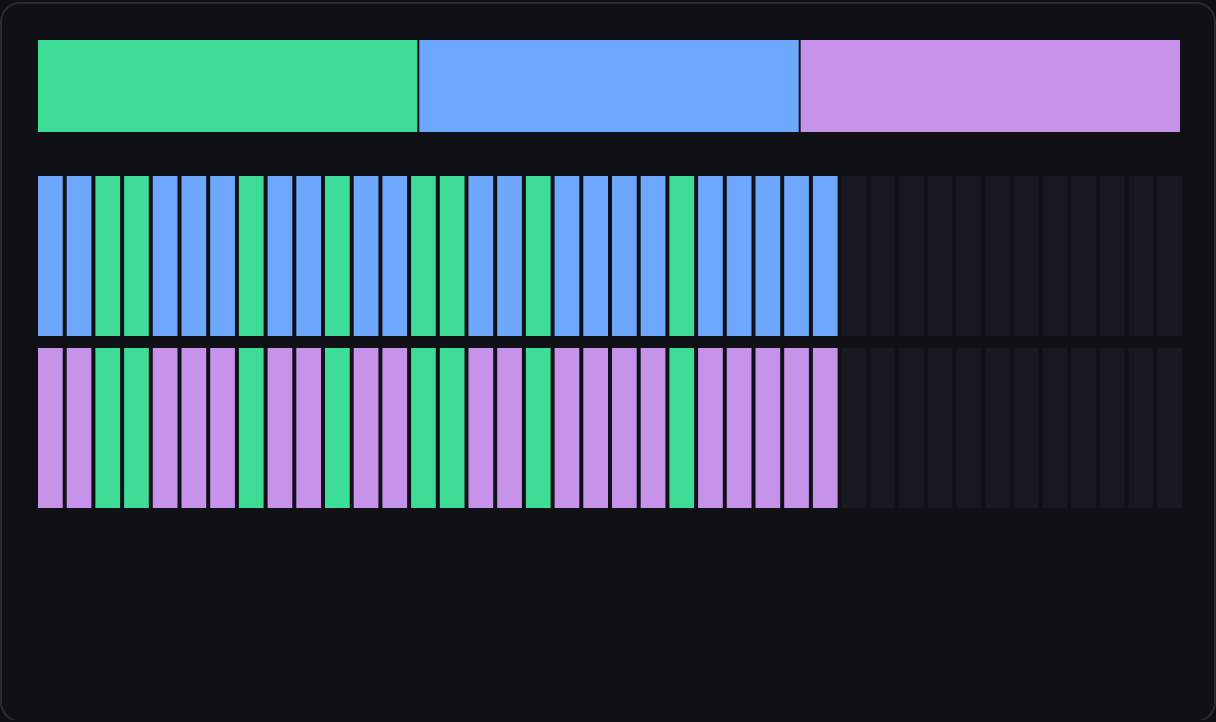
MinHash
Estimate how similar two sets are from the chance their smallest hash collides — Jaccard similarity in a handful of numbers.
O(m·|S|) sign.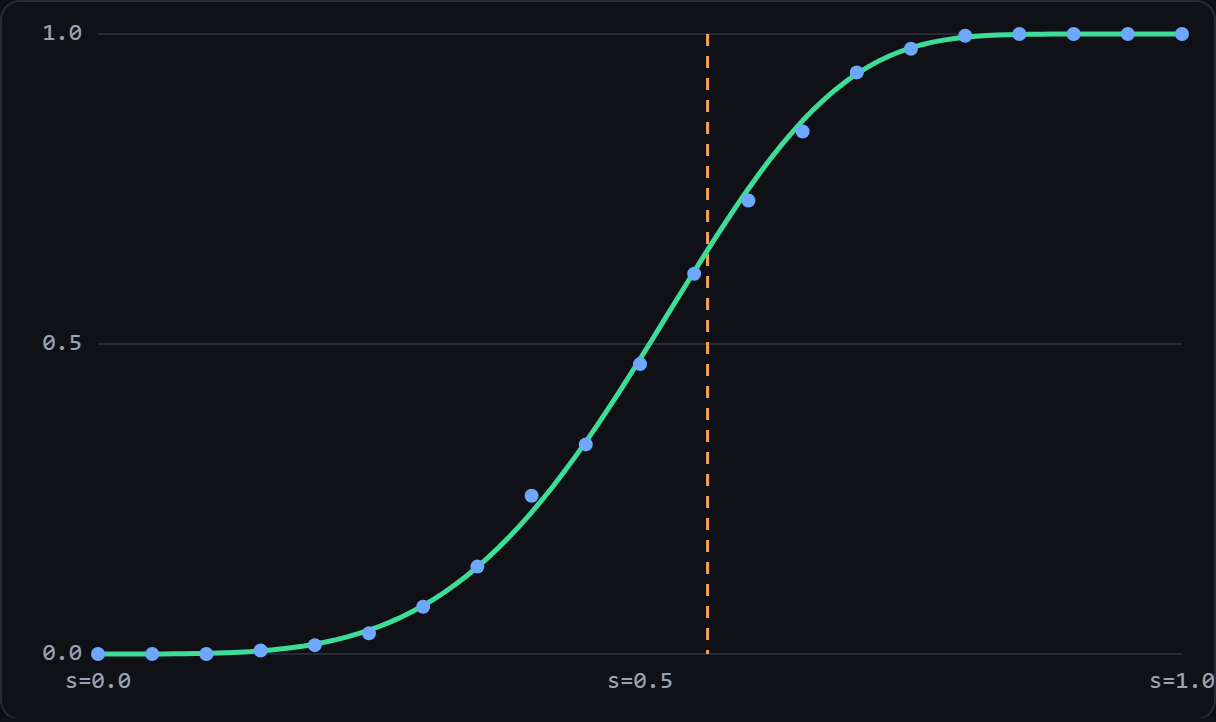
Locality-Sensitive Hashing
Bucket items so that similar ones collide and dissimilar ones don’t — turning nearest-neighbor search into a near-linear scan.
O(b) per item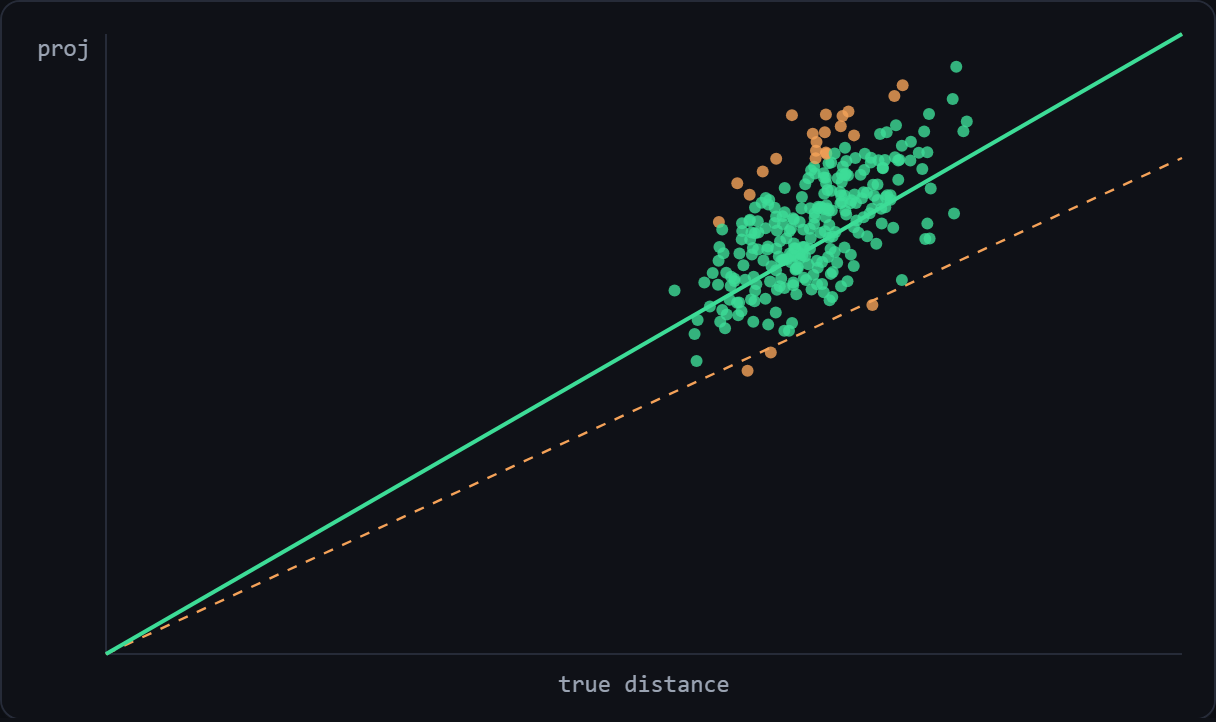
Johnson–Lindenstrauss
Squash high-dimensional points into far fewer dimensions by random projection — and keep every pairwise distance almost exactly.
O(n·k·D) projectSpectral Graph Theory 3
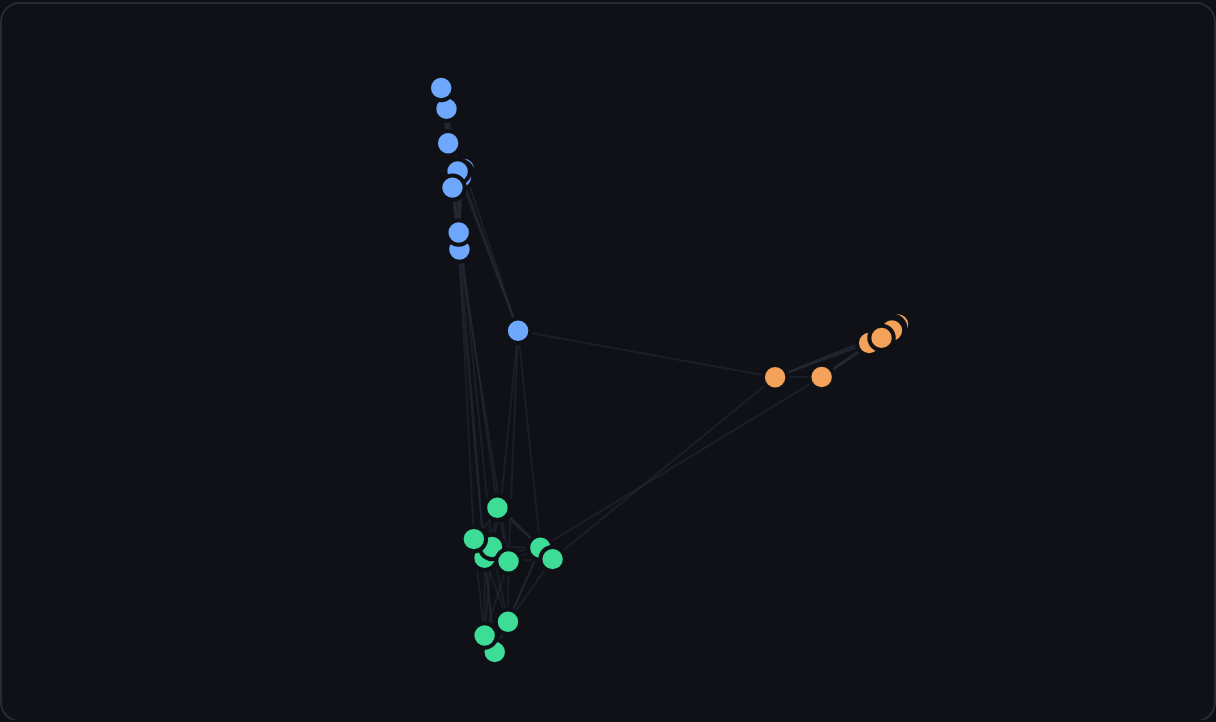
Spectral Graph Drawing
Draw a graph using its Laplacian’s eigenvectors as coordinates — and watch hidden communities fall into place.
eigenvectors of L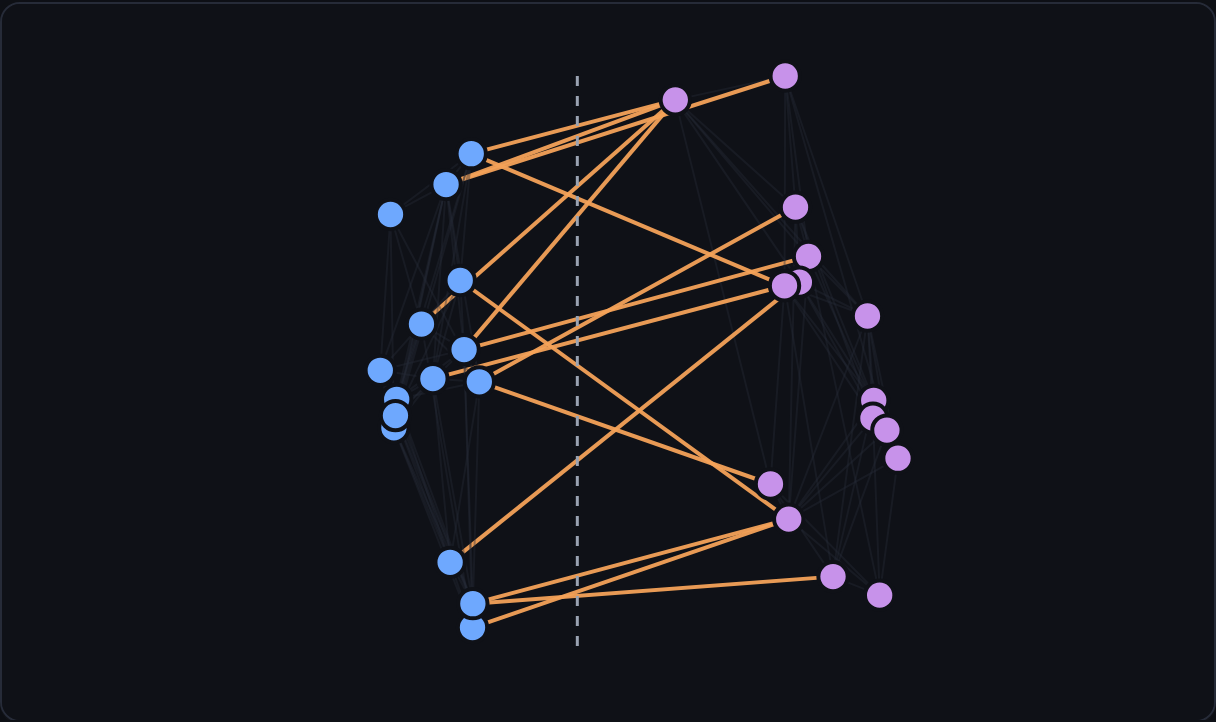
Spectral Partitioning
Split a graph into two balanced, weakly-connected halves by sweeping a cut along the Fiedler vector — provably near-optimal.
Fiedler vector + O(n) sweep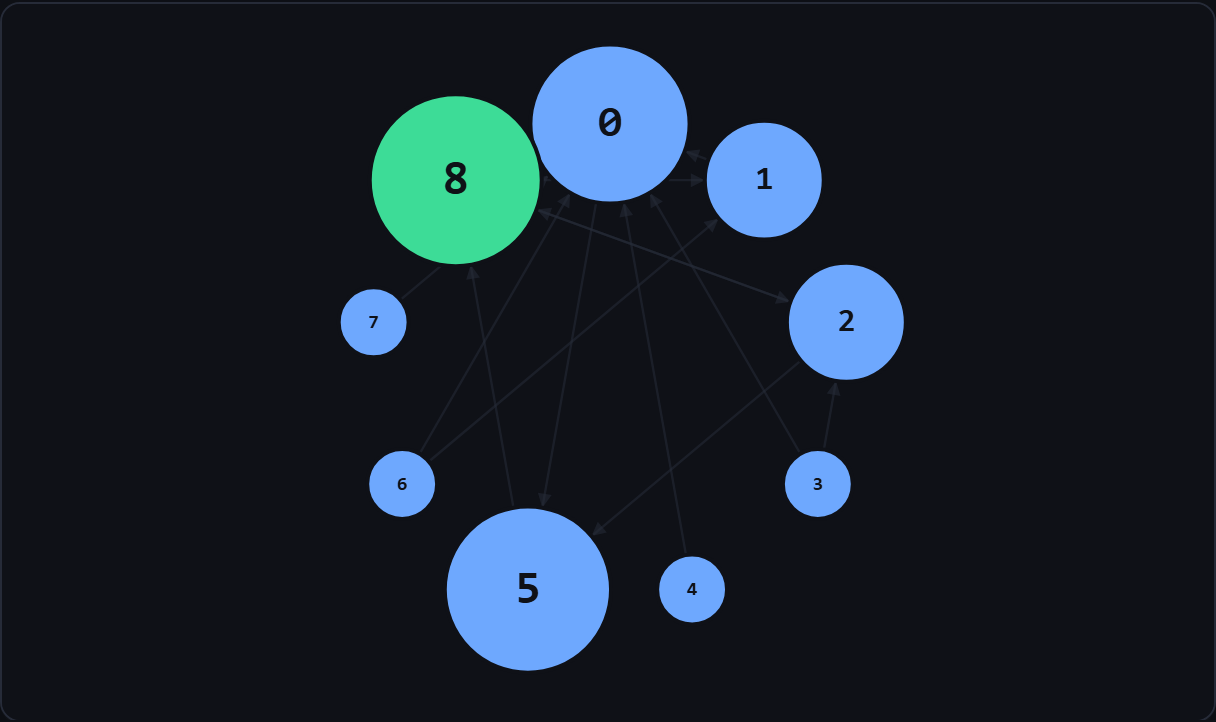
PageRank
Rank pages by where a random web surfer spends its time — the dominant eigenvector of the link graph.
O(edges) per iterationOptimization & Flows 2
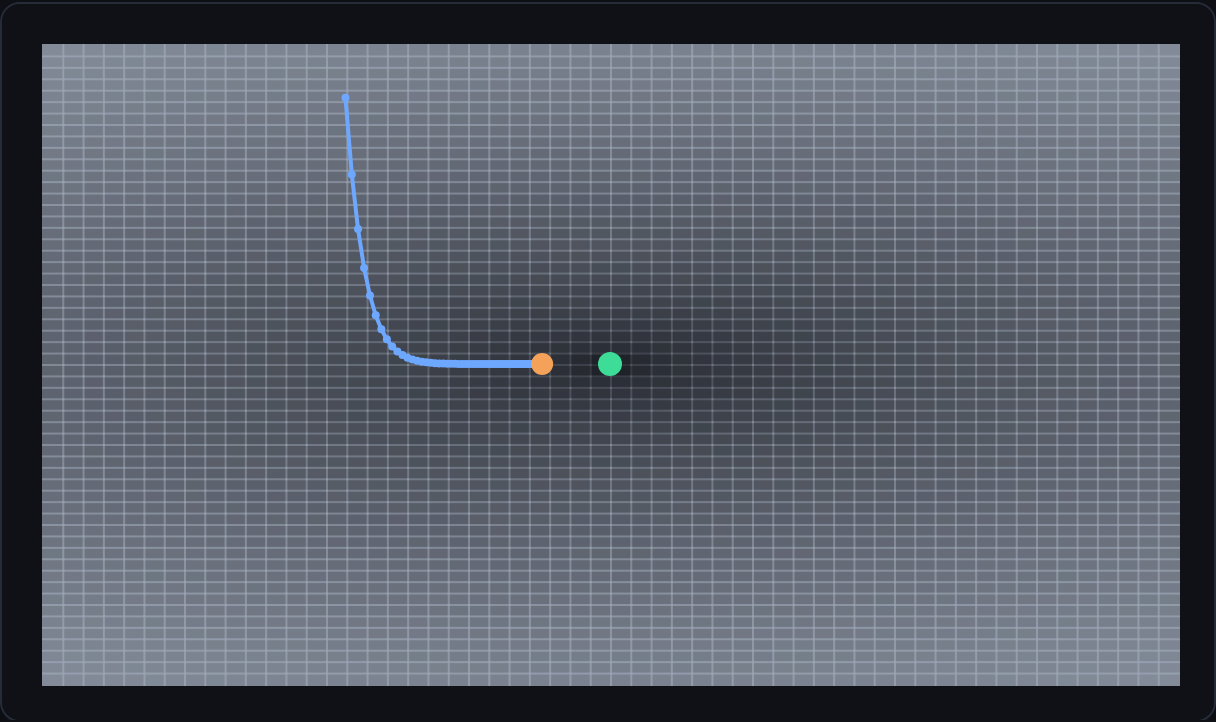
Gradient Descent
Find a minimum by repeatedly stepping downhill — the workhorse that trains almost everything.
O(1) gradient/step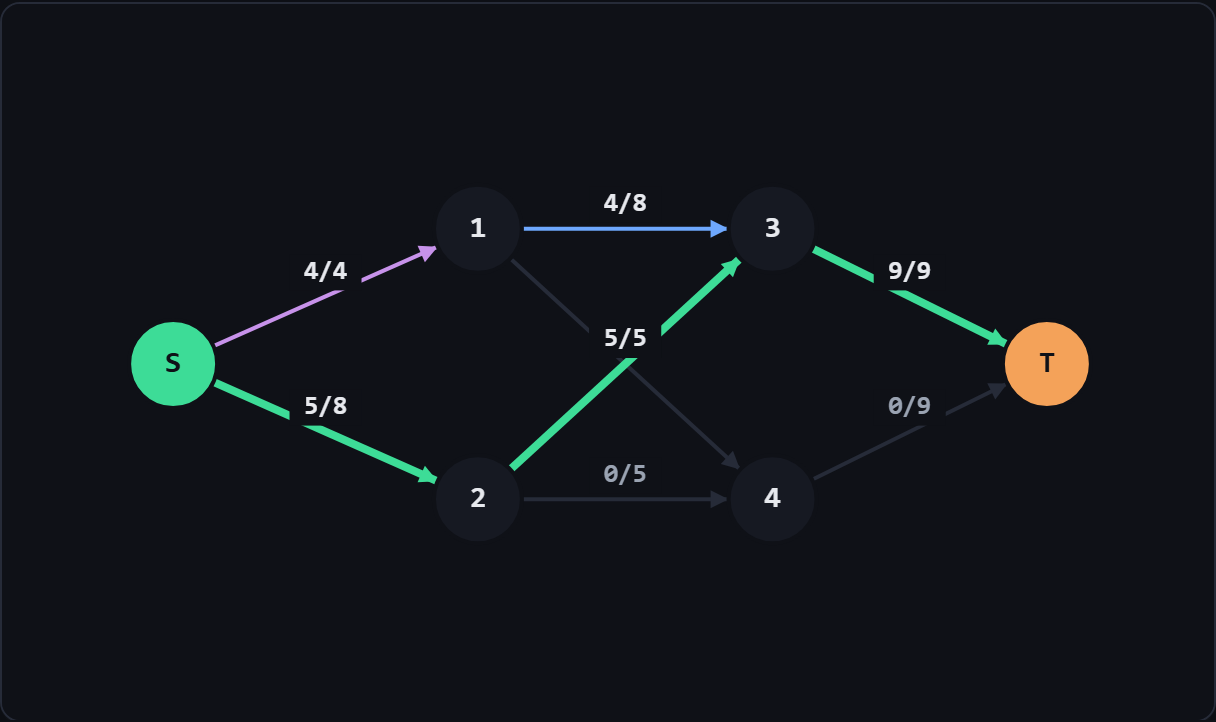
Maximum Flow (Edmonds–Karp)
Push as much as possible from source to sink — and discover the bottleneck cut that limits it.
O(V·E²)